
Prefilled Gabions: A Practical Approach to Retaining Walls and Infrastructure Projects
1. John, can you tell us a little about JML Gabions and what makes your approach different?
We've been involved in gabions and retaining walls and civil engineering for over 20 years, and prefilled gabions have become an increasingly important part of our business. Today, JML Gabions offers everything from in-house design and engineering through to manufacture, supply and installation. We work across the UK on projects ranging from smaller retaining walls to major infrastructure schemes, including highways, rail, flood protection and erosion control.
One of the things that makes us different is that we understand both the design and construction sides of the job. We can get involved early, look at the engineering, consider how the wall is actually going to be built and identify opportunities to make the whole process more efficient. We've also invested heavily in off-site manufacturing, particularly prefilled gabions, which have proved to be a real advantage on projects where access, programme or site safety are major considerations.
Being part of the wider JML Group also means we have the civil engineering experience and resources to take on associated groundworks, foundations and drainage where required.
2. You've invested in prefilled gabions. How do they work, and what advantages do they offer over traditional gabion construction?
Traditionally, gabion baskets are delivered to site empty, assembled in position and then filled with stone. It's a well-established method, but it can involve a lot of labour, plant movements, material handling, quality issues and time on site. With our prefilled system, we manufacture and fill the gabions in a controlled environment at our Perthshire facility before delivering them to site ready to be lifted straight into position. It's a relatively simple concept, but the difference it can make is substantial. Instead of bringing in loose stone, storing it, assembling baskets and filling them on site, you're effectively installing a finished product. That can significantly reduce installation time, labour requirements and the amount of space needed on site. It can also improve safety by reducing the number of operations taking place within the working area.
For highways and rail projects, where working space and access windows can be particularly restricted, those advantages can be considerable.
We hold a large amount of prefilled gabions in stock for immediate dispatch, which is particularly useful for emergency works, flood damage and other situations where a quick response is needed.
John Langley explains how JML's prefilled gabion system works and the benefits of off-site manufacture.
3. How important is it to consider the practical construction of a retaining wall at the design stage, and where can value engineering make a difference?
I think it's absolutely essential. You can have a retaining wall design that works perfectly well from an engineering perspective, but that doesn't necessarily mean it's the most practical or economical solution to construct. You need to consider the access, site and ground conditions, loading, drainage, excavation requirements, available working space and how the contractor is actually going to build it. We often get involved in projects where a design has already been prepared, but there may be opportunities to improve it. Sometimes relatively small changes to the wall arrangement, construction sequence or choice of gabion system can make a significant difference to the overall cost and programme. Having in-house design capability alongside our manufacturing and installation experience means we can look at the whole picture rather than just one element.
For me, good value engineering isn't simply about making something cheaper. It's about finding a solution that meets the engineering requirements but is also safe, efficient and practical to build. That's particularly important on highways and rail projects, where traffic management, restricted access and limited working windows can often have as much impact on cost as the retaining wall itself.
4. Can you give us an example of a project where prefilled gabions made a significant difference to the construction programme?
One of our best examples is the retaining wall we delivered for I & H Brown at Whitehills, Shawfair this year. The project involved more than 1,000 cubic metres of heavy-duty 6mm prefilled gabions, together with the foundations, drainage and associated works. We knew that once the site became available, the programme would be tight. So rather than waiting until we could get on site to start assembling and filling baskets, we manufactured and filled the gabions at our Perthshire facility in advance.
When the works commenced, the completed units were transported to site on articulated flatbeds and lifted directly into position using a 20-tonne excavator. We installed the entire wall, including the foundations, in less than five weeks with a small site team.
To put that into perspective, traditionally assembling and filling over 1,000 cubic metres of gabions on site would involve a considerable amount of labour, stone handling, plant and working space. By taking that work off site, we were able to maintain a much more controlled and efficient installation programme. Constructing a wall that size traditionally with a 5-man experienced squad would take over 10 weeks, twice as long with twice as much labour. It's a great example of how the construction method can have a major influence on the success of a project, particularly when you're dealing with large volumes and tight timescales.
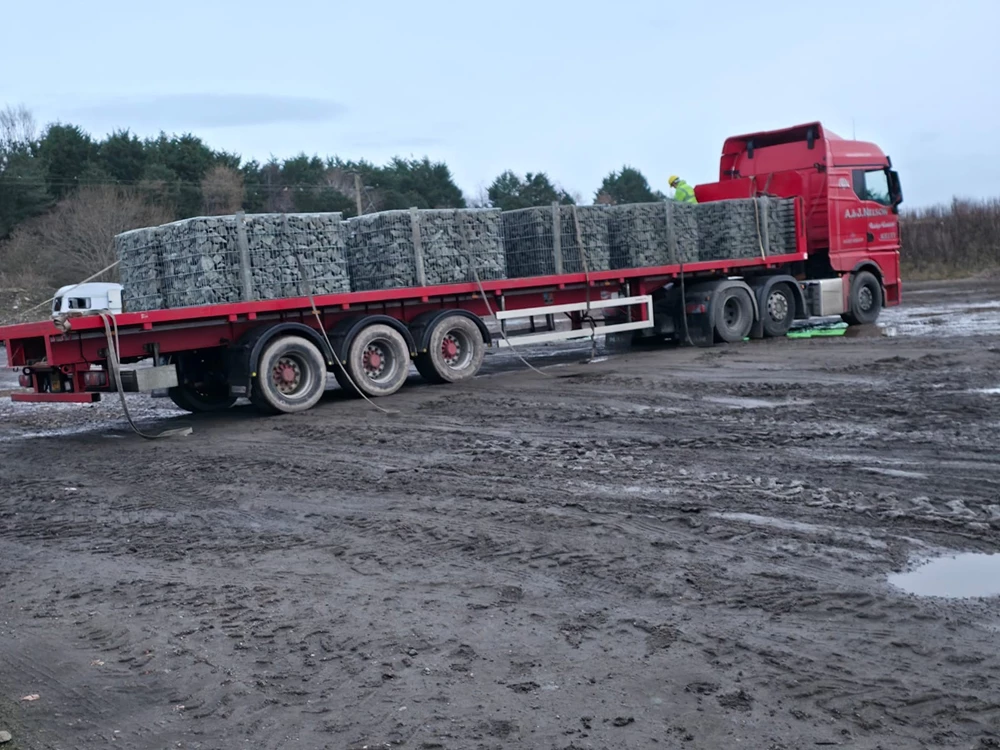
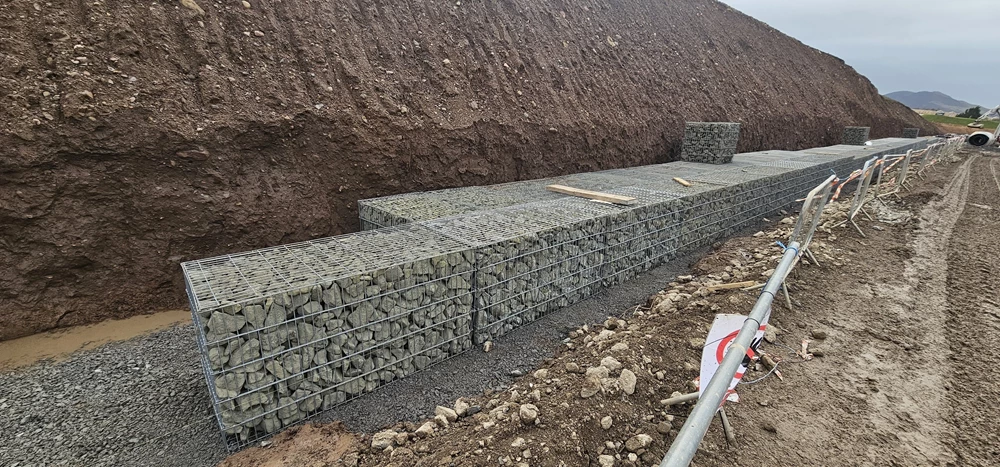
More than 1,000m³ of prefilled gabions installed at Whitehills, Shawfair, including foundations, in under five weeks.
5. What are some of the biggest challenges you've faced on retaining wall projects, and how have you overcome them?
Very often, the biggest challenge isn't the retaining structure itself but the location, access restrictions and how you can safely carry out the work.
A good example is the A9 at the Pass of Drumochter, where JML Contracts was rebuilding two large stone masonry cladding walls, one approximately 12 metres high, directly above the live southbound carriageway. We needed to protect the road from falling stone and debris while keeping traffic moving. Our gabion team designed, supplied and installed a temporary protection barrier using heavy-duty prefilled gabions, up to two metres high. The units were delivered by flatbed and lifted directly into position under a single-lane closure. This provided the necessary protection while allowing the masonry works to proceed, without the time and disruption of assembling and filling gabions alongside live traffic.
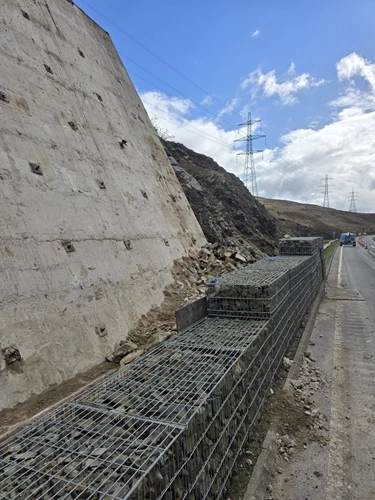
A9 temporary protection barrier made with prefilled gabions.
Another example is a major riverbank restoration project at Annick Water for Cairn Housing Association, where we were appointed as Principal Contractor to design, supply and install a new erosion protection scheme following the failure of sections of the riverbank and existing gabions. Working within the watercourse brought a completely different set of challenges, including restricted access, temporary works and environmental protection. We installed temporary sheet piling, created a working platform and constructed a temporary river crossing, while also managing fish rescue, invasive species and silt control. The works also involved liaison with local residents and coordination with Scottish Water over an existing culvert and surface water outfall.
To restore and protect the riverbank, we installed approximately 1,200 two-tonne, double-skin rock bags across four separate zones. These were prefilled off site and delivered ready to lift into position, reducing the need to handle and fill large quantities of stone within the river corridor. This made the installation much more practical in a challenging working environment.
Both projects demonstrate that finding the right engineering solution is only part of the challenge. Just as important is how you deliver it safely and efficiently, particularly where access is restricted, the environment is sensitive or essential infrastructure needs to remain operational.
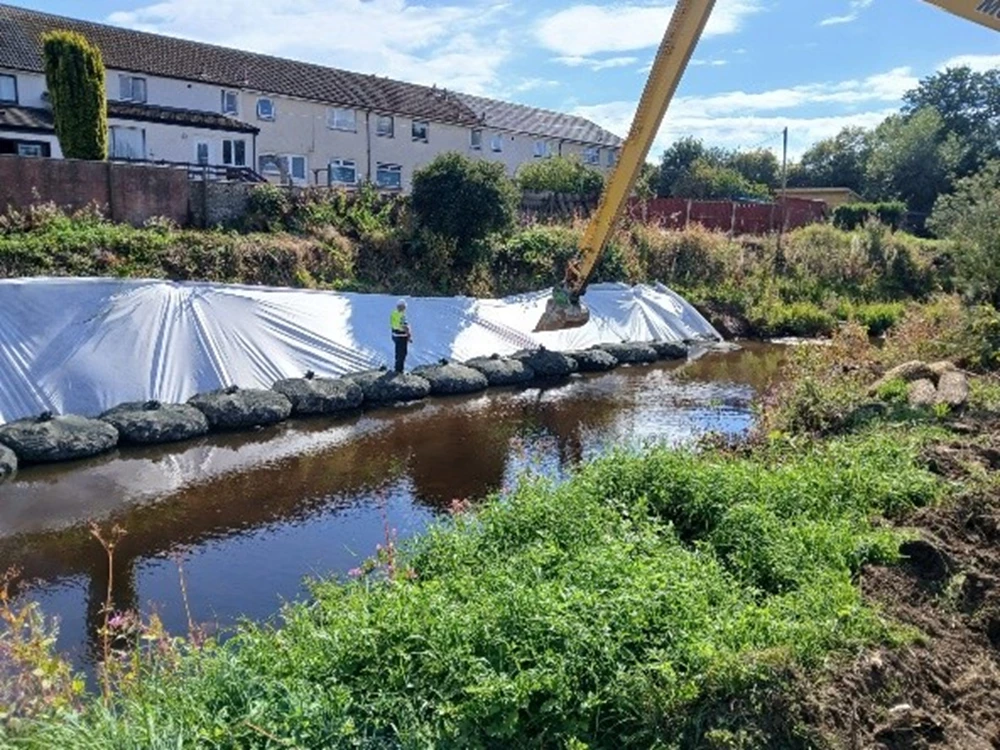
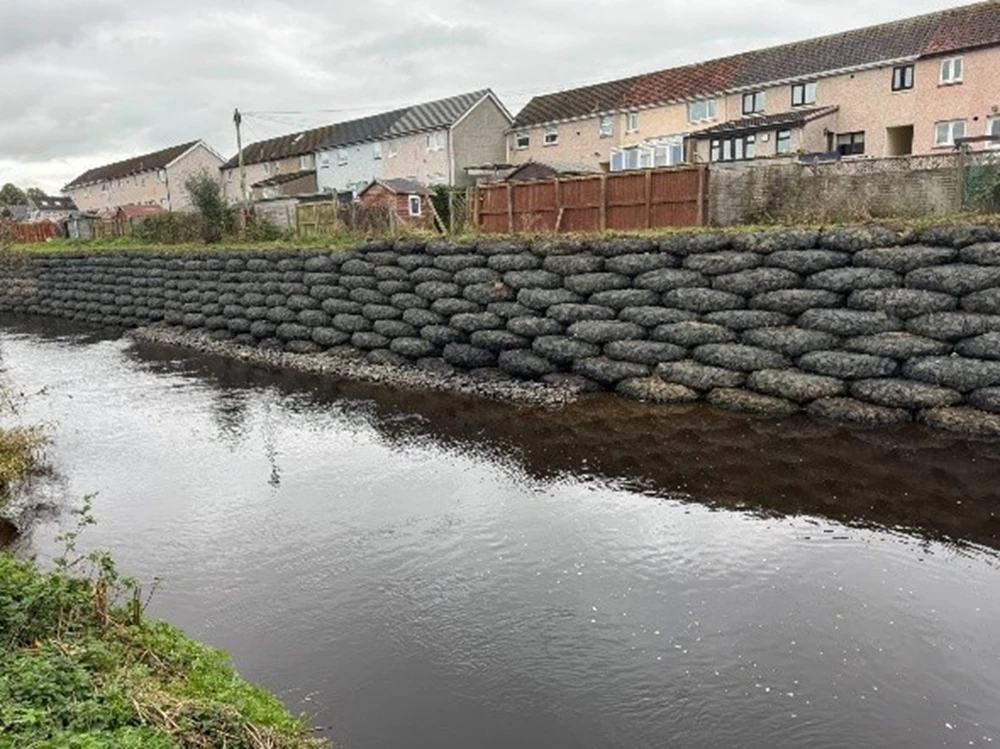
Riverbank restoration project at Annick Water: 1,200 two-tonne rock bags installed.
6. What are you hoping to achieve by exhibiting at Road Expo Scotland and Bridges Scotland, and what would you like visitors to take away from meeting JML Gabions?
We're looking forward to meeting contractors, engineers and designers working on highways, rail and infrastructure projects, particularly those dealing with retaining walls, erosion, scour and difficult ground conditions. I think a lot of people are familiar with traditional gabion construction, but perhaps haven't considered how much difference off-site prefilling can make to a project's programme, cost and safety.
We're keen to demonstrate what can be achieved, not just through prefilled gabions but through getting involved early in the design process and looking at the overall construction requirements. We can offer everything from design and manufacture through to supply and installation, or simply provide the elements a contractor needs.
We're also particularly interested in speaking to people working on challenging sites where access, time or available working space is limited. Those are often the projects where we can add the most value.
Ultimately, we'd like people to come away knowing that JML Gabions is more than just a supplier of gabion baskets. We're a specialist team with the design and engineering expertise, manufacturing capabilities and practical site experience to help develop and deliver the right solution for their project.